Old Parn's Wine Reviews

The collected wine-tastings & wine-ramblings of one who prefers to describe wines with metaphors, not percentages

Gin Corner: Greenall’s Bloom — The Slug’s Choice

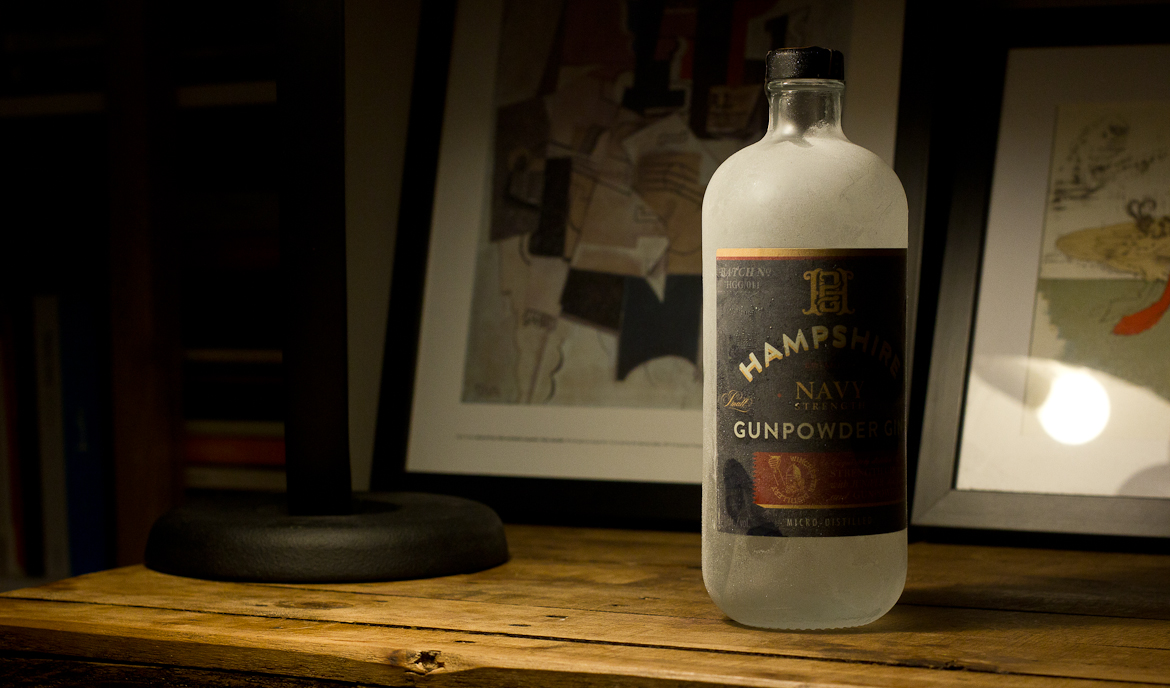
Macro photo of a bottle of Greenall's Bloom, with logo in focus

Oh. The leafy, herby, juicy green aroma of corriander. Heck. It’s like you’re a slug munching your way through a herb garden. (You are such a slug.)

Greenall’s Bloom is, I suppose, aptly enough named. It is a big ol’ herbaceous gin.

Here at Old Parn labs, we put Greenall’s Bloom through a rigorous and scientific testing procedure. I made a gin and tonic with it, and I made a martini with it. Then I repeated these tests several times (purely for scientific purposes, natch). Here’s what the results sheets said.

The Greenall’s Bloom Gin and Tonic

Yeah, it’s all about the corriander, here. In tonic-wedded form, Greenall’s Bloom isn’t as punchy as some (loyal readers will know that I like my G&Ts like I like my women: punchy and bitey*). When I made a Greenall’s Bloom and Tonic with my usual proportions of gin:tonic (don’t ask me what they are; I just feel it, y’know?), the result was a little bit lacking. A tad sweet, even.

But, next time round, perhaps my hand slipped. You know what I’m saying? MY HAND SLIPPED. And I ended up with a higher proportion of gin. And that, a bit like taking the path less travelled, made all the difference.

Suddenly, I was drinking an assertive, confident bastard of a G&T. One that’d just had a massive Thai stir-fry piled with obscene amounts of corriander, I guess.

Pretty nice.

The Greenall’s Bloom Martini

No surprises here, given what I’ve said already: the Bloom Martini is as green and herbaceous as you’d expect. Lighter, more hippyish than your usual Martini. And, yeah, nice for the novelty value. But I’ve not been tempted to make them for non-experimental purposes. Greenall’s Bloom strikes me as more of a G&T-friendly kind of gin; it doesn’t really gel in the context of the Martini. That magical masculine-feminine chemistry isn’t there; it’s all a bit too verdant, too lush, too goddamn fertile.

The verdict

So long as you atone for its slightly less bolshy character by adjusting your gin:tonic ratio, this is a pretty nice G&T gin. I like the grassy, herby ebullience of it — though probably more as an occasional curveball to the palate than as an everyday highball-filler.

I’d recommend putting it with a lighter tonic (something like Fever Tree Naturally Light) — or, if you want to sample the hippy Bloom Martini, try using The Wine Society’s Chambery as your vermouth, and go for a twist rather than an olive.

* That’s not even remotely true. But didn’t it sound cool?

Lemons, stones and sunshine for a sodden marmoset

A bottle of Verdejo; in the background, the blurred, rainy street lamps of London

What do you need after battling through the bleak London rain? What do you need after huddling shivering and sodden on the back seat of a bus whose windows have been inexplicably flung open by some masochistic Chelsea commuter?*

You need a glass of Tresolmos Verdejo, you miserable, trauma-eroded marmoset, you.

Because it’s very nice. And (which is One Of The Reasons For Which I Love The Wine Society) it defibrillates your tastebuds with a flavour you can’t pick up off the shelf at your local express supermarket, that’s for sure.

Defibrillation for £7.50. Save the NHS a few quid and do it my way.

So, as I jerk back to consciousness, my gob’s suddenly alive with bitter, gripping zest — lemony pith. But alongside the electric, citric jangle, there’s that fullness. That almost indecent fullness, set alongside all that bite and the zing. But it’s not a bit oily, not a bit flabby. It’s like a slim, clean sort of chap who goes to yoga five times a week: he may look slender, but he’s strong.

I drink Tresolmos Verdejo and it makes me think of being outside when it’s not actually freezing and hosing down with rain. If you can picture that scene even vaguely. Makes me think of lemons and the oil of lemons on my fingernails. Of stones and sunshine.

And of a beautifully aerated number 22 bus.

Rating ★★★★ 4 stars (very good)
Region Rueda, Spain
Grape Verdejo
ABV 13%
Price £7.50 from The Wine Society. But — ye gods! — I now find it’s sold out.  Back in stock!
* Yeah, so, according to guardian angel of the online wine community Robert McIntosh, the fresh air is good for me. What-ev-er.

Slovenia vs Slovakia (wine and geographic confusion)

Slovenia, Slovakia; Slovakia, Slovenia. Two nations that, I realise, are entirely distinct and just happen to have names that a mindless idiot like me is always getting mixed up. I’ve never been to either (perhaps, had I done so, my confusion would cease). But I have met several people from both countries, all of whom have been delightful human beings.

On this principle, I approached both Slovenian and Slovakian wine — neither being exactly easy to find, here in the UK — with optimism. And decided to crack open a bottle from each and to pit them against one another in an attempt to use the medium of wine to overcome my inability to remember which country is which.

(Okay. That’s one of the lamest excuses I’ve come up with to open two bottles of wine. And that’s saying something.)

A bottle of Pinot Gris from Tilia Estate, Slovenia

So — the outcome of this meaningless and artificial clash of two proud nations? Something of a one-sided contest, I’m afraid. Because — alas! — my Slovenian contender was less than championship material. A Tilia Estate Pinot Gris (★, £12.99) that I bought from Naked Wines a while ago — which was, honestly, just a bit depressing. Sort of like Luton airport, but without the prospect of being en route anywhere better.

I mean, it’s not undrinkable or anything. But it’s slack in the gob; rather heavy and sullen. A pudgy child who’d rather be playing Call of Duty than turning up to PE. There’s nothing outright offensive about it. I just, well, hoped for better.

The label of a bottle of Alibernet by EleskoWhich is just as well. Because better is exactly what I got, courtesy of Slovakia and Adam Priscak, who kindly brought me back a bottle from his latest trip home. Step forward one wine made by Elesko called Alibernet 1, neskorý zber, suché, 2009 (★★★★). Which is a lot of words that I don’t understand. Nice, eh? Adam tells me that this wine is made in small quantities. Fine by me, so long as I get some of it. Because it is sodding lovely. As deep as a very deep hole (with some mushrooms growing in it, perhaps). Ripping and earthy and proud. There’s a kind of polishy quality to it (as distinct from Polishy, which is a bit further north — for the benefit of those of you using this blog as a guide to central/eastern-European geography. You poor, poor buggers.)

It’s full and fruited, but not remotely glib. Dark, big and extremely good. Thank you Adam; thank you Elesko. Fine representatives of your nation.

So it looks like the scoreline is currently Slovakia 1; Slovenia 0. Based on a ludicrous and utterly unrepresentative sample. Just the way we like it. So I’m putting out a call for recommendations of Slovenian wines that could even the score… Suggestions in the comments, s’il te plait.

The Best Tonic for Gin and Tonic

This post is part two in a three-post series devoted to the gin and tonic. Part 1 endeavoured to find the best gin. Now, in part 2, the mission is to find the best tonic for gin and tonic…
A closeup of a mini can of Schweppes Tonic

Some time ago, we had the gigantic joust of the gins. Now, at long last, it’s time for the titanic tiff of the tonics.

Oh, fuck, how much of a wanker does that pair of alliterations make me sound? DON’T ANSWER.

Today’s mission, then, is to find out which tonic makes the best gin and tonic. The deal here was pretty much the same as with the gins: taste ‘em blind in one joyously ginny lineup. The gin used was my favourite common brand, Tanqueray.

(When I say common, I don’t mean lower class; I mean the kind of gin you’d be able to find at any half-decent UK supermarket or off-license.)

And I make no apologies for the fact that the lineup includes no slimline tonic varieties whatsoever. Because slimline tonic is the corrosive piss of satan.

Anyhow, here — from worst to best — are the results…

The best tonic for gin and tonic — results

9. Schweppes Tonic Water

Oh Schweppes, oh Schweppes. You fell, my boy. You fell bad. You landed on your arse.

I grew up on Schweppes G&Ts. Since my first mini-fridge at university, I always had a rank of yellow-and-silver mini-cans available, on ice. Alas.

Schweppes came out bottom of the taste test. Not marginally; clearly, and by some distance. It has a back-of-the-throat catch that I associate with artificial sweeteners, and a cheap, metallic quality to it. That said, it does also have bite. And it’s sure as hell better than sodding Britvic, which is a heinous tonic I didn’t even bother to include in this tasting. Compared to other tonics (including all the supermarket brands) it made for a sweeter, blander, more tacky gin and tonic. A saccharine blagger of a tonic, a little too confident that his illustrious background will win your admiration. The kind of tonic who hangs around in Chelsea and talks shit all the time.

I should add, though, that even the Schweppes G&T was nice. I criticise it relative to the others, but, Christ, let’s keep a sense of perspective.

8. Marks & Spencer Tonic Water

M&S only seems to do tonic in big 75cl bottles. A silly omission. In a G&T, M&S tonic is inoffensive. It’s got an unexpected bready sort of quality, but not much bite. It’s refreshing, but rather nothingy. A diffidently pleasant tonic without much to say for himself. Probably enjoys listening to Coldplay.

7. Fever Tree Mediterranean

The first of three Fever Tree variants, this character didn’t combine enormously well with Tanqueray. Like M&S’s effort, it sits toward the inoffensive side of the spectrum. It’s also a tad on the sweet side. A slightly wet ex-hippy of a tonic.

6. Waitrose Tonic Water

A gin and tonic with Waitrose tonic is a balanced sort of affair. It too has a slight breadiness, which I rather like. Again, though, there’s a tendency towards oversweetness — though neither as extreme nor as artificial as that of Schweppes. A balanced, middle-of-the-road kind of tonic. Squarely a Radio 2 listener.

5. Fever Tree Naturally Light

Nice. The gin and tonic made with Fever Tree Naturally Light — perhaps unsurprisingly — was less tonicky than most. With a bolshy, no-nonsense gin like Tanqueray, that’s not particularly necessary, but for the more subtle, aromatic, delicate gins (Greenalls Bloom, for instance, or Hendricks), this would be rather a splendid thing. A sensitive, quietly-spoken tonic; a good listener.

Closeup of the yellow label of a mini-bottle of Fentimans Tonic Water4. Fentimans Tonic

Here’s where things start to get interesting. Fentimans makes for a damn good gin and tonic. It’s crammed with flowers (violets!) and citrus. I’d gleefully drink this tonic on its own; in many ways it has more in common with something like bitter lemon than what I think of as tonic — there’s so much goddamn fruit in there. The gin and tonic it makes is delicious, lemony, full of zing and zang. But, I have to say, it’s nothing like my idea of a classic gin and tonic. An unabashed attention-seeker — the kind of tonic that ignores the dress code — but you can’t help liking it, nevertheless.

3. Sainsbury’s Tonic

Wow. This one came in from left-field. The coveted Old Parn Value Award goes to Sainsbury’s for this fantastically strapping tonic. Savoury, bready, confident.  Really far in excess of my expectations of a supermarket own-brand tonic, it’s a diamond in the rough — a good looking charmer in a down-at-heel nightclub.

2. Fever Tree Regular

Yup. It’s good. It’s very good. This is Fever Tree’s most successful tonic for a straightforward G&T. It’s balanced and rather delicious. What keeps it from topping the poll is a slight oversweetness. Far less pronounced than elsewhere, but I’d still prefer a bit less sugar; a bit more bite. Nevertheless, a very fine tonic indeed. Generous, charismatic and considerate.

A bottle of tonic water by 6 o'clock1. 6 o’Clock Tonic

And, finally — just sneaking in ahead of Fever Tree — comes 6 o’Clock Tonic. This is goddamn outstanding. A pity it’s a bugger to find (I’ve so far only been able to locate it in Whole Foods and online), because it has everything I want in a tonic water (including pleasantly minimalist packaging design). Why do I like it? Because it’s dry, it’s grown up. There’s a leafiness to it, a sharp, bracing sting. It’s not even slightly confected, not sugary or patronising. Set a gin and 6 o’Clock Tonic alongside a gin and Schweppes tonic and compare the two. You will be astonished at the difference — at how facile and glib the Schweppes one tastes.

A self-confident tonic with a dry wit and fucking excellent style — and deservedly crowned Old Parn’s best tonic for gin and tonic.

A Picpoul de Pinet to neutralise canine flatulence

The label of this bottle of Picpoul de Pinet features elegant typography and simple silhouette images of trees

A quickie, today.

(Ooh.)

So here’s a smashing Pee Pee de Pee from The Wine Society. Yes, that’s the same Wine Society that just won Decanter’s National Wine Merchant of the Year award. For the second time running. Which just goes to show two things: 1. that this blog is occasionally (if only coincidentally) capable of vague topicality, and 2. that Decanter Magazine does occasionally manage to do/say something that isn’t as annoying as a farting dog on a rush hour tube.

Anyhow, back to the Picpoul. And a bewitching character it is. The first thing that hits you is the smell: bright, ringing, clean. Delicious. Then you get it into your gob. It’s proper, grown-up, complex, with that stony, bracing quality: while it may be light, it sure as hell ain’t lite.

Elegant, poised and deeply, deeply satisfying. Have a bottle in your fridge and snatch it out when autumn next sees fit to unveil her fleeting sunshine.

Or when you next get home after a long commute alongside someone’s flatulent pet.

Rating ★★★★ 4 stars (very good)
Region Languedoc & Roussillon
Grape Picpoul
ABV 13.5%
Price £7.50 from The Wine Society; £8.95 from BBR

A Pinotage that’s all fruit and curves and perpetual smiling

Closeup of the Manley Estate label — fairly traditional line drawing of vineyardManley, it’s not you; it’s me. You’re great. Really, I mean it. It’s just — well — you’re just too nice.

I like wines that make me work a bit. Not a lot, you understand (I’m way too lazy for that) — but a tad. And there’s something about Manley Estate’s Pinotage that is a bit too easy. It puts itself on a plate for me. Not, you understand, literally (although that would be fine: I’m happy to take my wine from whatever receptacle presents itself), but, y’know, metaphorically.

That’s not to say Manley is bad. It’s really not at all. It’s all fruit and soft curves and perpetual smiling. I’d just like to see what it looks like with a frown on its face, too.

Christ, enough with the metaphors, Parn.

So, yeah. Fine. Easy to drink. Quite full. Smiley. Could do with more brusqueness. A tad expensive. But fine. Nice.

Oh Manley. When this is all over, I do hope we can still be friends.

This bottle was received as a free sample from Naked Wines

Rating ★★ 2 stars (fair)
Region Tulbagh
Grape Pinotage
ABV 14.5%
Price The 2009 is sold out, but the 2010 costs £13.99 from Naked Wines (£10.49 for members)

What happens when you Drink at Eat?

A pie and potato from Eat (in disposable pie box) and a mini bottle of Stowells white wineWhen a place calls itself Eat, perhaps that’s, y’know, a kind of subtle hint that the emphasis isn’t on the wine list.

Be that as it may. Defying corporate nomenclature, I decided to put Eat’s wine selection to the test — with characteristic ruthlessness.

Be warned: there are scenes in the following post that readers of a sensitive disposition may find upsetting.

You can read the story of the whole desperate, sorry experience in my guest post across at eVines. Here’s the link.

Oddbins launches promotion *definitely nothing to do with the Olympics*

Oddbins promo artwork for a campaign definitely not linked to the OlympicsOkay. Now, I normally tear through unsolicited email press releases like a velociraptor through a paddock of newborn foals. But the Oddbins one I received yesterday was rather entertaining.

Ayo Akintola, the Oddbins MD, has apparently become incensed (with, of course, that particular kind of anger that just so happens to make for a good news story) at the branding restrictions imposed on small businesses that aren’t official Olympics sponsors.

As a result he is offering a ninja discount to all Oddbins customers. It’s not an Olympic discount — because he can’t call it that. It’s just a discount that coincidentally happens to celebrate an unnamed national event and to last for the next three weeks.

Here’s the funny bit.

The discount (30% off) applies to anyone coming into an Oddbins shop bearing items made by non-Olympics sponsors. Nike trainers, Vauxhall car keys, a can of Pepsi, a KFC receipt…

Yup. It’s provocative and attention-seeking. But I kind of like it. Here’s another image.

Oddbins promo artwork for a campaign definitely not linked to the Olympics

Boss Wine

A bottle of Bussola ValpolicellaWhen your boss invites you round after work and gives you a glass of wine, you’re not reviewing that wine.

But you still notice when that wine happens to be a lovely fucker, don’t you? And if you have some kind of weird disorder whereby you actually feel a bit guilty for not reviewing a lovely wine (as though the wine’s feelings might be hurt by this scandalous omission), you end up resolving two things:

  1. TO MAN THE FUCK UP AND STOP ANTHROPOMOPHISING THINGS, YOU LOSER; and
  2. to write an unabashedly subjective blog post about it, anyway.

So. My boss (who has a very generous way with the wine, I might add — a generosity that has its drawbacks, the following day) pressed a glass of Bussola Valpolicella into my hand. And — jeeps, boy — it was very lovely indeed. Huge, intense, strong — but soft, yielding, gentle.

The wine, that is; not my hand.

Though my hand is also all of those things.

Anyway. Bussola Valpolicella is a delicious wine. I’m not going to give it a star rating, because this ain’t a real review. But if you’re in Majestic, I’d grab a bottle (it’s £22). You don’t have to review it, either. Just drink the old bugger and enjoy it. Sharing it with your boss is optional.

The Best Wine I Drank All Week

A cold bottle of Pinot Grigio made by HardysHow does a cheap, mass-produced bottle of mediocre Pinot Grigio become The Best Wine You Drank All Week?

That’s the question I pose in my latest guest post for eVines. As a bonus, you also get to find out how your hero came to be mesmerising the rural population of Kent with a natty pair of white disposable slippers, and encounter vaguely slapstick anecdotes involving cow pooh.

WHAT’S NOT TO LIKE?

Anyhow, please be my guest and read the whole thing over at eVines.